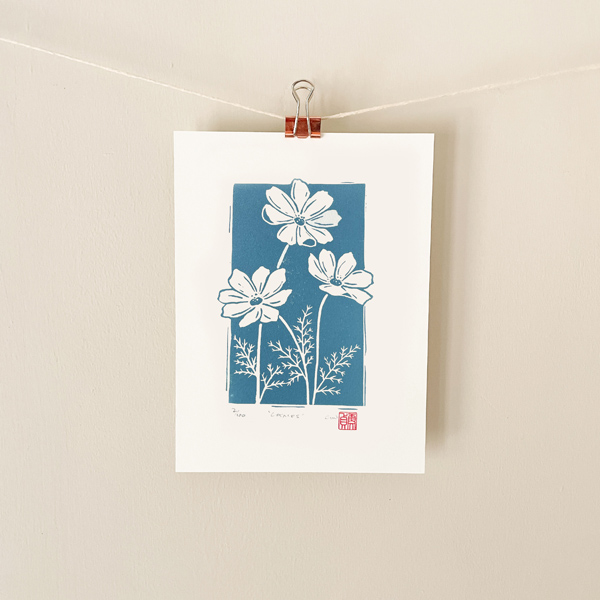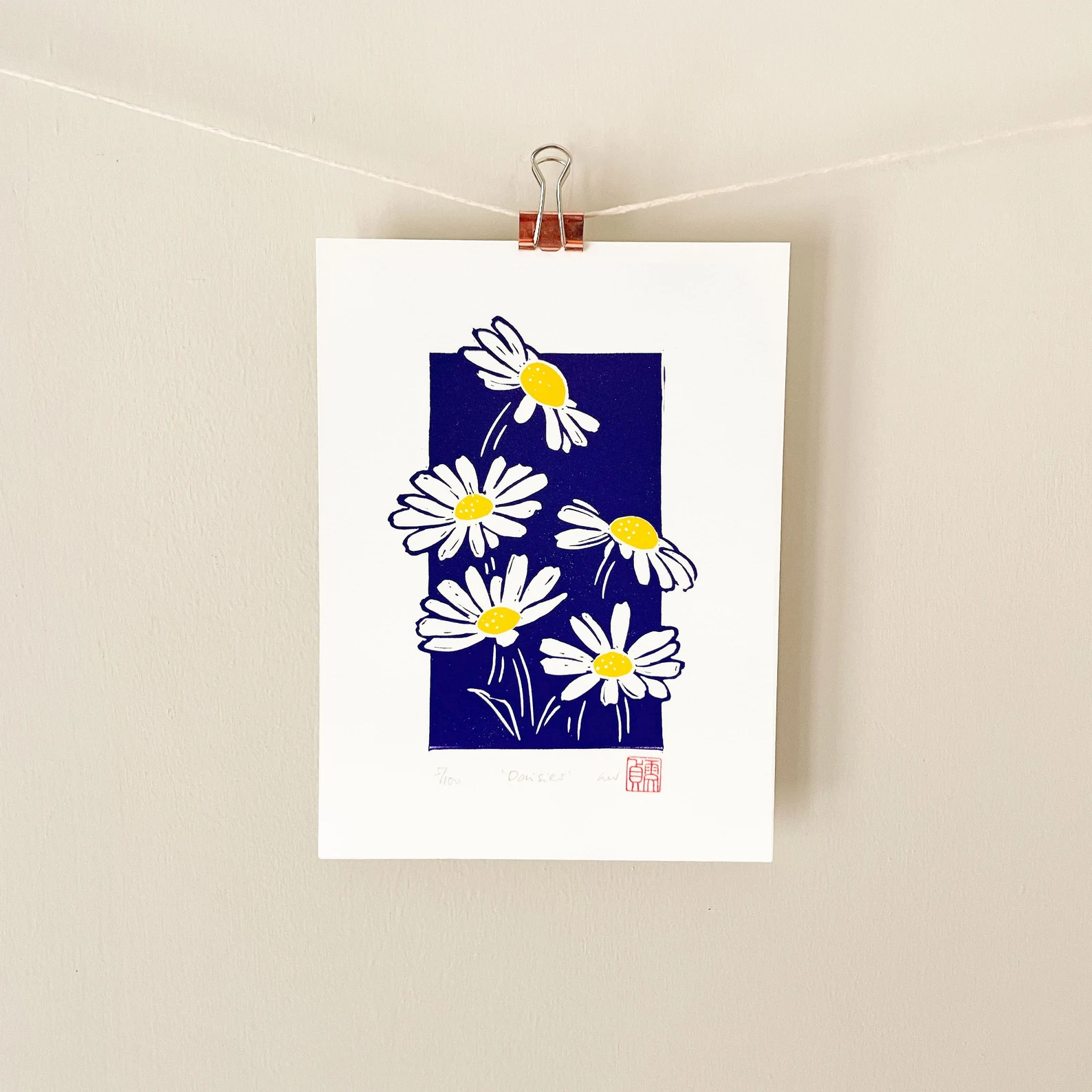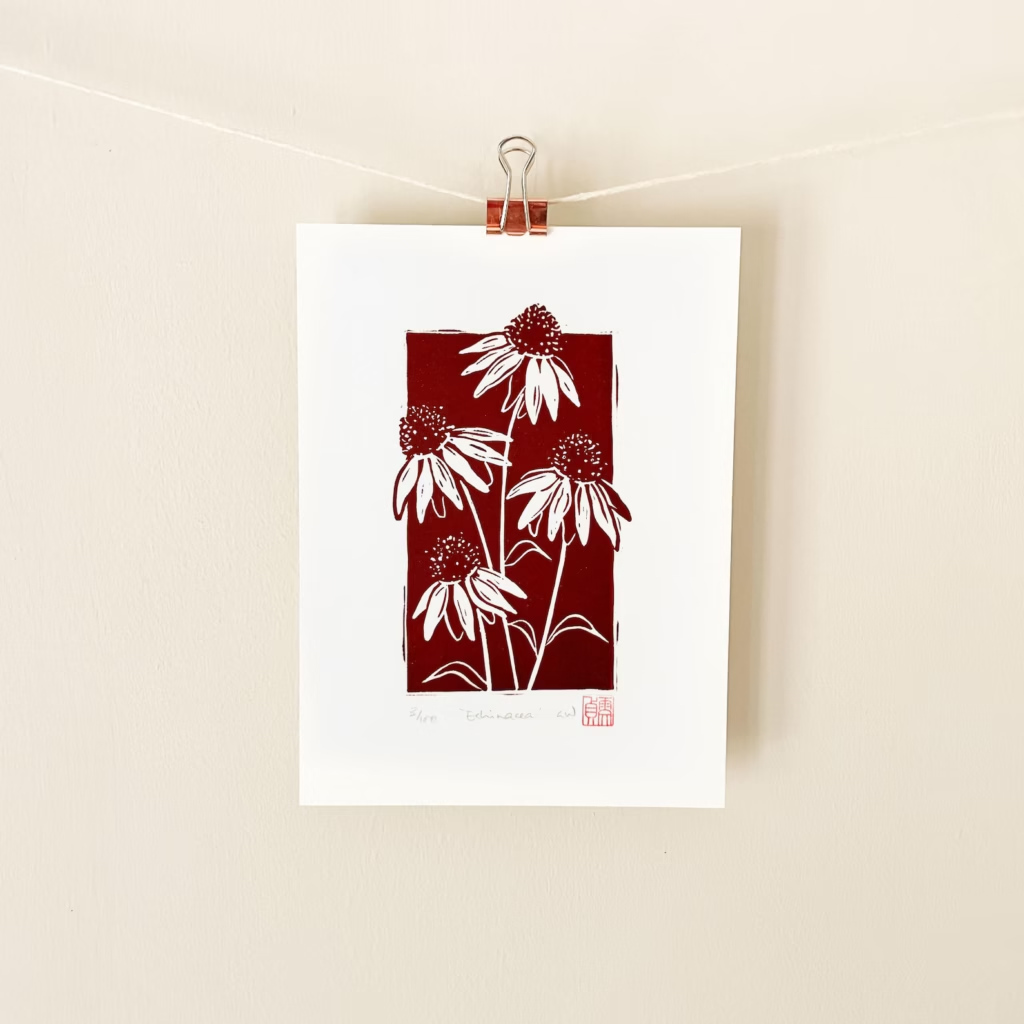
Every print in my shop begins as a blank sheet of lino and a quiet afternoon at my table. I’m Grace, a linocut printmaker based in Sheffield, and I hand-carve and hand-print every piece myself. People often ask what actually goes into a single print, so I wanted to open the studio door and walk you through it — from the first sketch right through to the finished, signed print that arrives at your door.
I discovered linocut back in 2021, and it quickly became the part of my week I look forward to most. There’s something about the process — slow, tactile, a little unpredictable — that I find genuinely calming. Here’s how it all comes together
First, a quick word on what a linocut is
A linocut is a form of relief printing. The design is carved by hand into a block of linoleum, then ink is rolled onto the raised surface that’s left behind and pressed onto paper. Anything I carve away stays ink-free and shows up as the white of the paper; everything I leave standing holds the ink and becomes the image. It’s a bit like making your own detailed stamp — except every stage is done by hand, and the result is a bold, characterful print you simply can’t get any other way.
That handmade quality is the whole point for me. These aren’t posters or digital copies. Each one is an original, hand-printed linocut.
It starts with the natural world
Almost everything I make begins outdoors. I’m drawn to the quiet beauty of the natural world — woodland walks, hedgerow flowers, the shift from one season to the next. I sketch the shapes that catch my eye: the curve of a stem, the pattern of petals, the structure of a leaf.
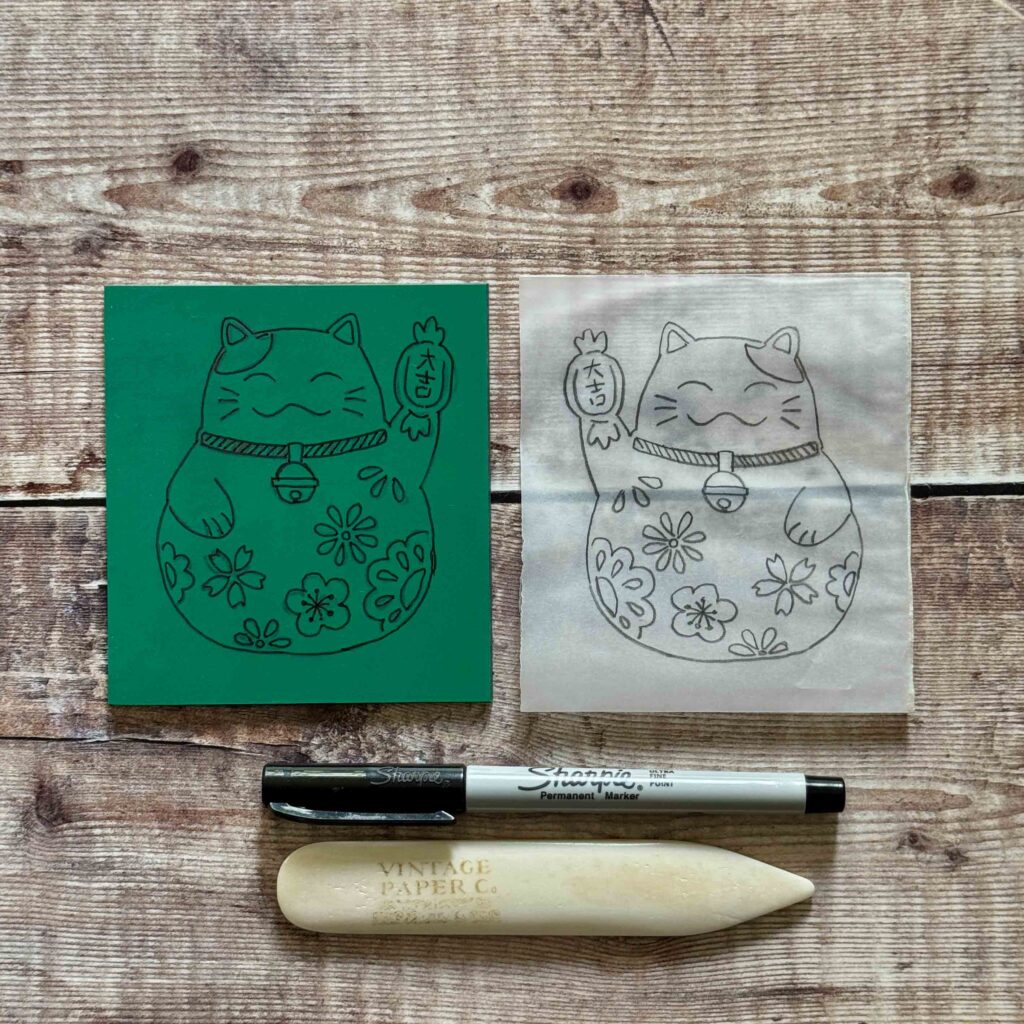
My style leans towards clean lines, bold contrast and a sense of joyful simplicity, so I spend a fair bit of time paring a design back to its essentials before anything is carved. My background in architecture, sewing and photography probably feeds into that instinct for line and composition. Once I’m happy with a drawing, I transfer it onto the lino block, ready for the part I love most.
Carving the block by hand
This is the slow, meditative heart of linocut, and honestly it’s my favourite way to switch off from everything else.
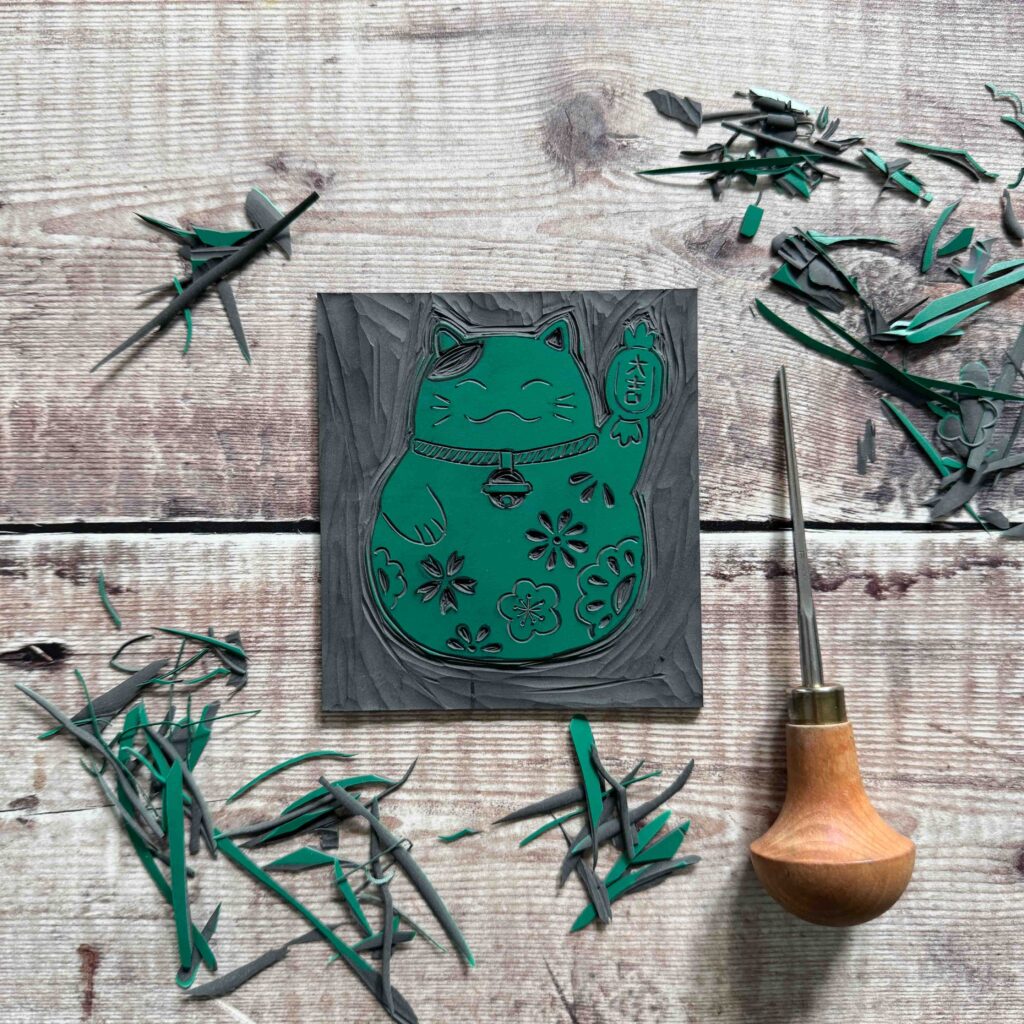
Using a set of small gouges, I carve away everything that won’t hold ink. Fine V-shaped tools handle the delicate outlines and the detail; wider U-shaped tools clear the larger open areas. Every line is carved by hand, one cut at a time — and there’s no undo button, so it pays to slow down and stay in the moment. That focus is exactly what I love about it. Carving asks me to concentrate on nothing but the block in front of me, and I find that incredibly grounding.
A single block can take anywhere from a couple of hours to many sittings spread across several days, depending on how intricate the design is. I sharpen my tools as I go to keep every line crisp and clean. It’s absorbing, careful work, and there’s real satisfaction in watching a design slowly emerge from a plain grey block.
Inking and printing — one piece at a time
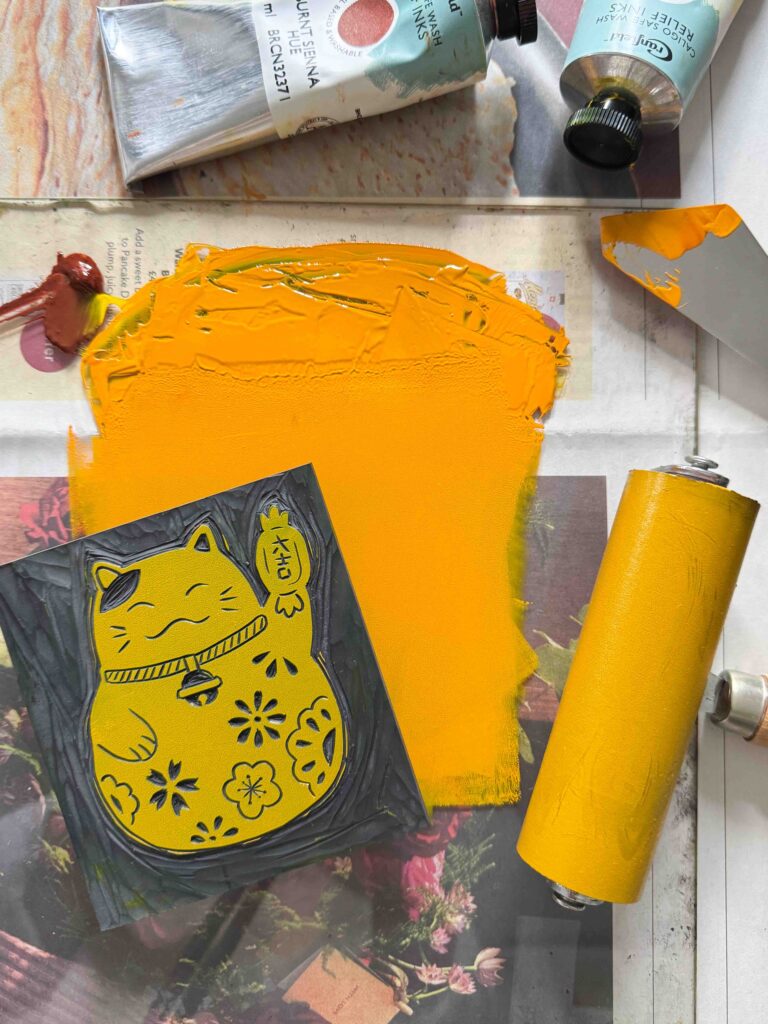
Once the block is carved, it’s time to bring it to life. I roll a thin, even layer of ink across the raised surface using a hand roller called a brayer. You can actually hear it hiss when the ink is at just the right consistency — one of those small, satisfying signals that things are going well.
Then I lay my printing paper carefully over the inked block and apply firm, even pressure to transfer the image, either by hand-burnishing or using my printing press. Peeling the paper back to reveal a fresh print never gets old. After all these years, it’s still the moment I look forward to every single time.
Here’s the part that makes every piece special: the block only holds enough ink for one print, so I re-ink and print each one individually. Tiny variations in ink coverage and pressure mean no two prints are ever quite identical. Each one is its own small original — pressed by hand rather than run off a machine — which is exactly why I love working this way.
Drying, signing and limited editions
Fresh prints need time to settle before they can be handled. I hang or lay each one flat to dry, and oil-based inks in particular can take a good while to cure properly. Rushing this stage is the quickest way to smudge a print I’ve spent hours making, so patience is part of the process too.
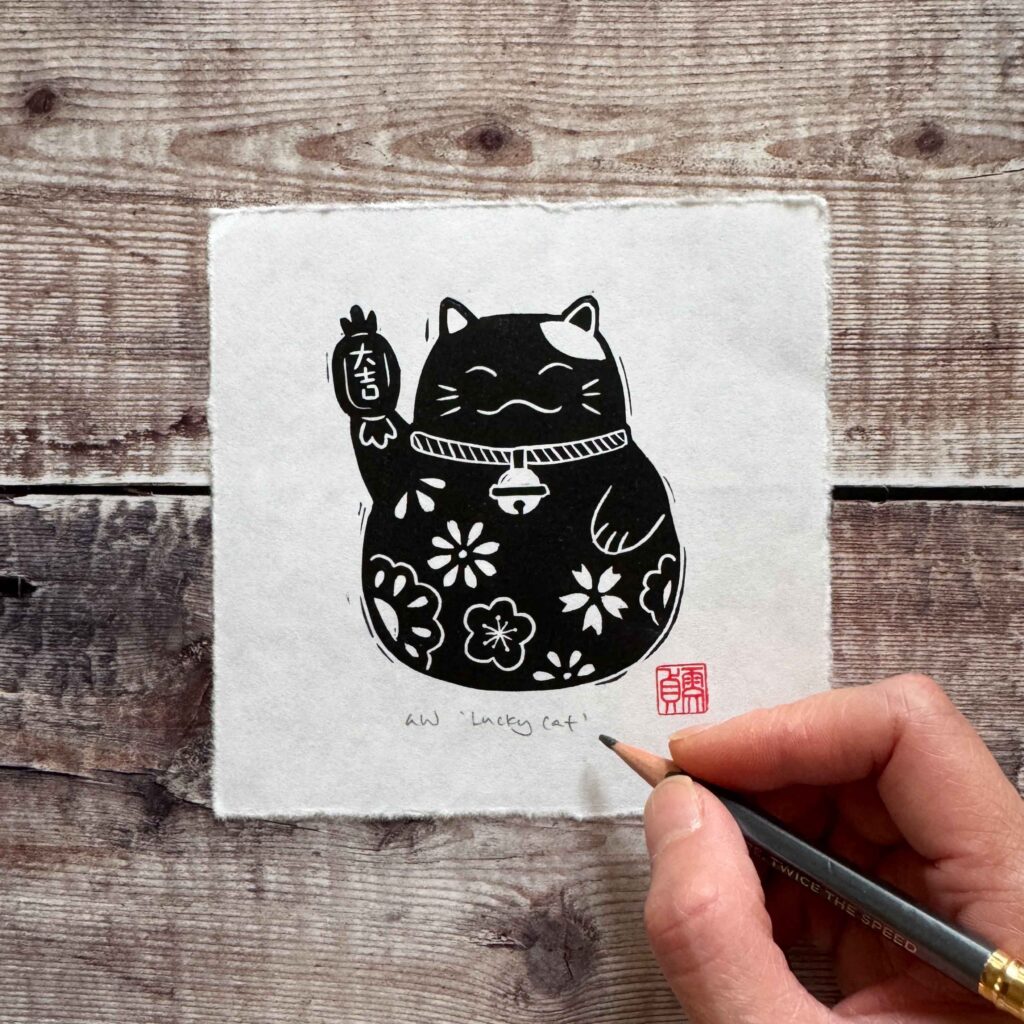
Once everything is dry, I check each print carefully, sign it, and add it to a limited or opened edition run. When a limited edition sells out, that’s it — the block is retired, and no more are made. It’s part of what makes owning an original linocut feel that little bit special.
Why I do it this way
I could make things faster. Plenty of art is reproduced at the click of a button these days, and there’s nothing wrong with that. But for me, the whole joy is in the making: the meditative carving, the satisfying pull of a clean print, the small imperfections that prove a human hand was involved at every stage.
Because each print passes through my hands from start to finish — designing, carving, inking, printing, drying and signing — a finished piece carries all of that care with it. So when one of my botanical linocut prints ends up framed on your wall, I love knowing it began as a sketch of something growing outside, and travelled through every step by hand to get there.
Thank you for taking the time to learn a little about how my prints are made, and for supporting handmade art — it genuinely means the world.
If you’d like to see the process in motion, I share carving and printing clips over on Instagram at @gracewong_art. And whenever you’re ready, you’ll find my latest original linocut prints waiting in the shop.